Spring Break in Salt Lake

17 Mar

I really wanted to go to the beach for Spring Break. However, the resident Captain had to be at Camp Williams for the Saturday and Sunday of the week, so driving the opposite direction to Sand Diego or Puerto Penasco didn’t make sense this year.

We were considering whether to take the family to Salt Lake City for Spring break, and then Key Lime Pie won our regional Poetry OutLoud competition, and the state final was in Salt Lake City on the Wednesday of spring break week. Decision made.

We got to Salt Lake City on Tuesday evening, and the first thing I did Wednesday morning was get a haircut. Currently, the biggest pain point of living in Monument Valley for me is living so far away from a good haircut. I still haven’t found a stylist within a 4-hour drive that cuts my hair the way I’d like. Even this cut was not what I initially asked for, but I compromised when it became clear that I wasn’t getting the cut I wanted. At least it’s cut.

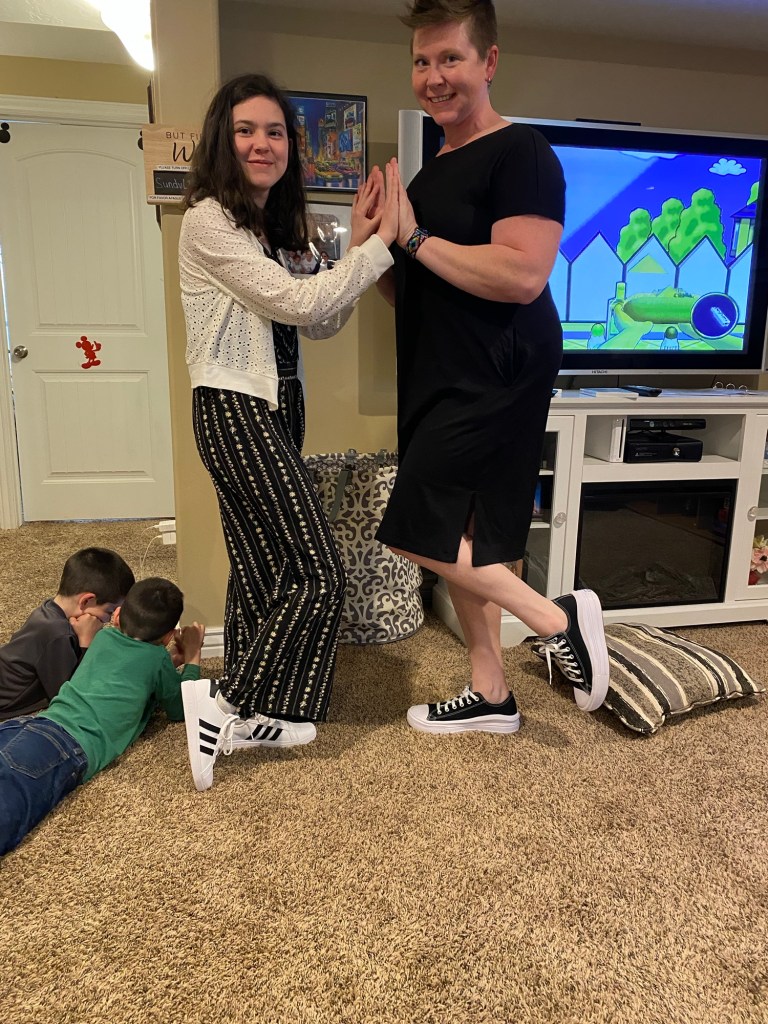
After the haircut, I took Key Lime Pie shopping for an outfit for the night. She bought her own shoes! what a grown-up!

Then the Man is the House and I went to a runners store and got new running shoes because we started our favorite couch to 10K running program again. I am determined to build up some cardiovascular fitness and endurance! I also got these sweet converse kicks on clearance. When I saw them, I knew the kiddie pies would approve.

Ready for the Evening

All the contestants, but one, were type 1 energy girls, just like Key Lime Pie, so they became instant friends and already have a text chat group.

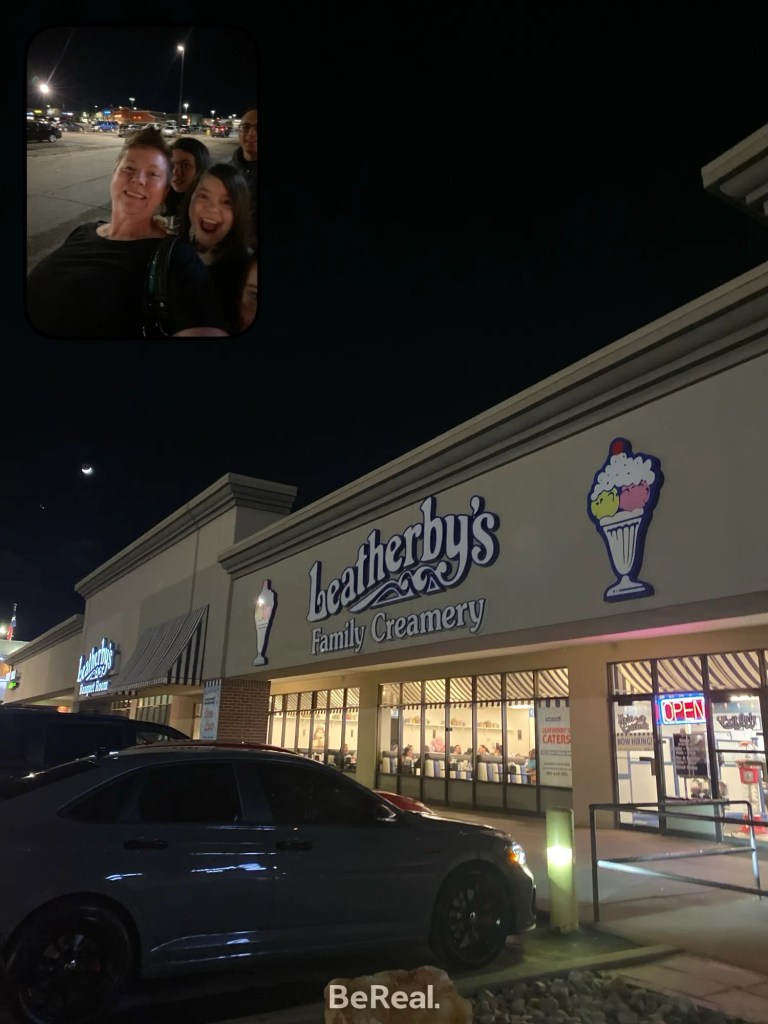
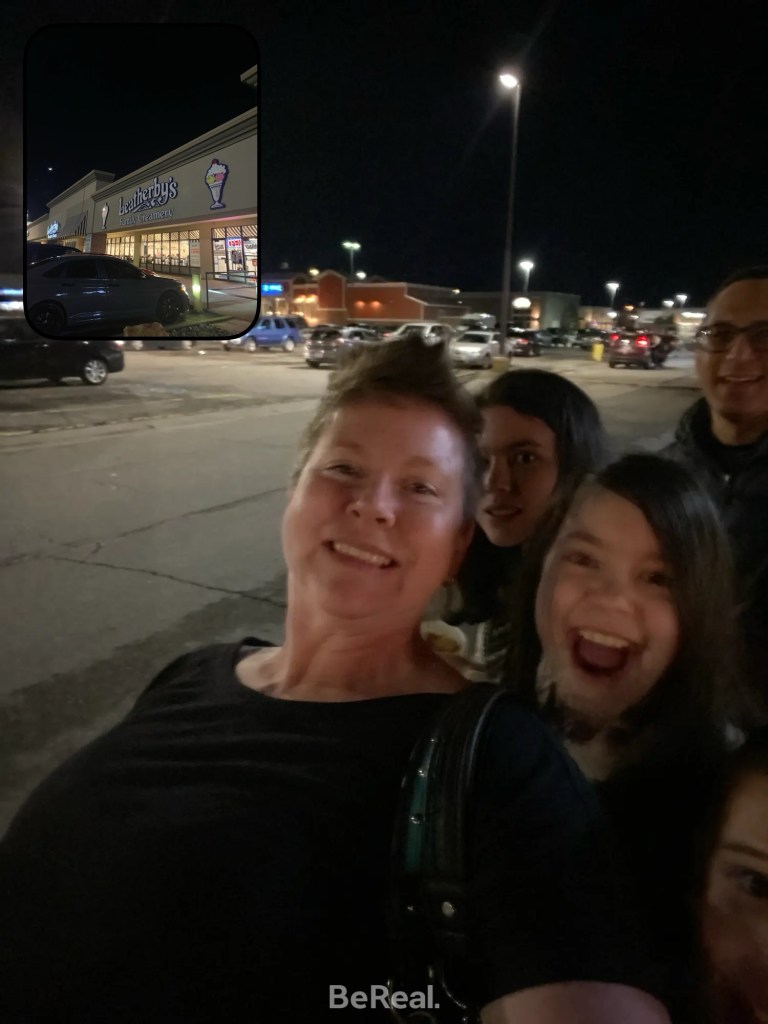
After the contest ended, we went to Leatherby’s Family Creamery and had ice cream. I had the best coconut cream pie ice cream I’ve ever eaten.

Thursday, we found a place called “Classic Fun Center” in Sandy, Utah. We bought discounted tickets online and spent about 6 hours there playing in the bouncy houses, jungle climbing, laser tagging, nerf blasting, roller skating, and arcade gaming. I have zero pictures. We were too busy having fun.

Thursday night, we left the kids at the Airbnb with microwave Mac-n-cheese, and the Man of the House took me to a delicious Indian restaurant in American Fork. Chicken Tikka Masala, Lamb Curry, naan, and mango lassies! Yes please!

The Skooter Pies were very happy to skip Indian food and eat macaroni and play the Wii instead.

Friday, we went to Clark Planetarium. We had free tickets to the IMAX theater, thanks to Key Lime Pie’s astronomy teacher. We watched Deep Sea 3D. The kids were amazed by the 3D movie. The narrators (Johnny Depp and Kate Winslet) were very soothing, so I admit, I fell asleep for an unknown chunk of the movie. After the movie, we spent about 1.5 hours playing with all the interactive exhibits. Friday was probably not the best day to go, because there were 2 school groups, and it was pretty crazy and crowded. But the exhibits were stellar. We would have stayed much longer, but we all got hungry and caved in to baser needs than exploring.

Friday afternoon, we headed to my friend Shelley’s house. She moved from Missouri about the same time we did and loves to have us visit.

Pumpkin Pie and Peach Pie drove down from Rexburg to visit us, too. That was lovely. We did lots of talking about their school and future plans.

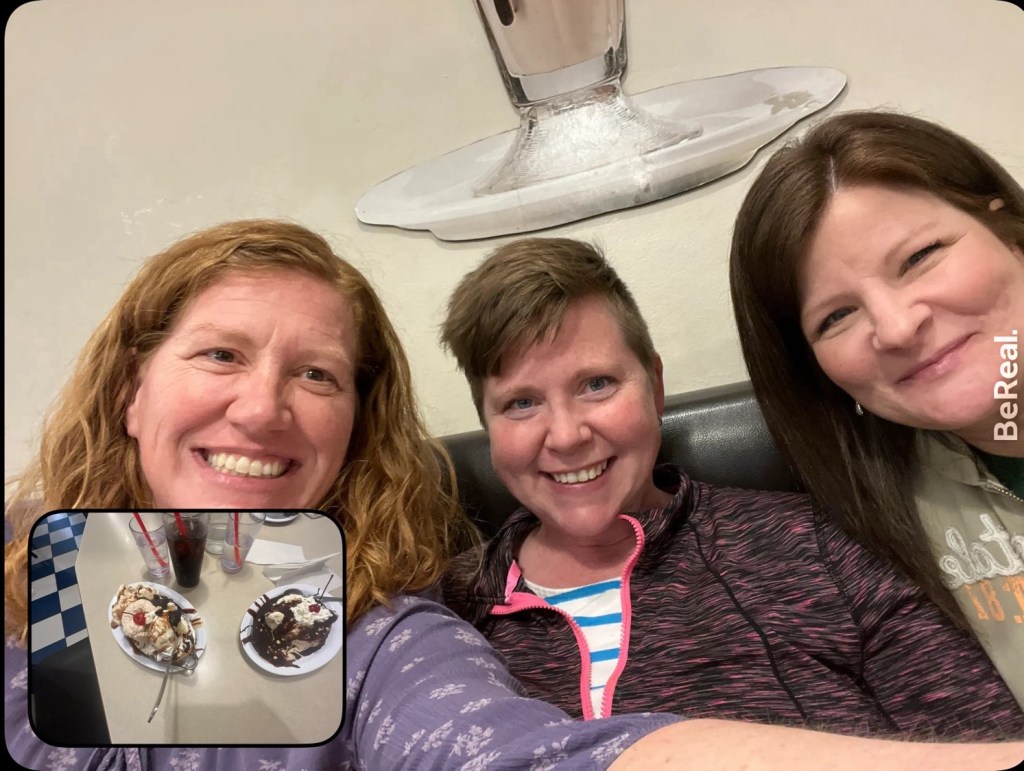
Friday night, the resident captain headed off to Camp Williams for soldier duty. Shelley, Robyn, and I went to Leatherby’s Family Creamery for a girls’ night out! Robyn is another Missouri friend who lives in the Salt Lake Area now.

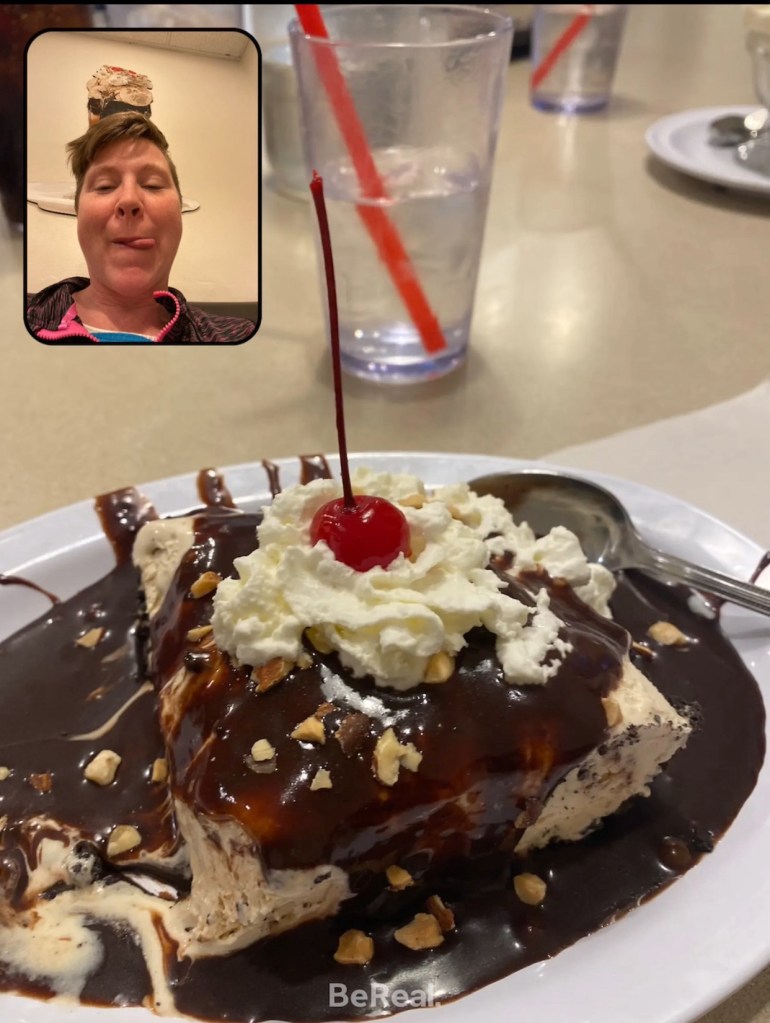
I ordered the mud pie, and it did not disappoint! So, so, so delicious- but not overwhelmingly sweet. Girls night at Leatherby’s will happen again.

Mud Pie with chocolate sauce 🤌🤌😤🔥

Saturday, we went to an early Easter breakfast at Shelley’s ward. Then Shelley and I ran some errands (like picking up dry cleaning because when I’m in town with all the stores, I have to do all the things that cannot be done in Monument Valley.)

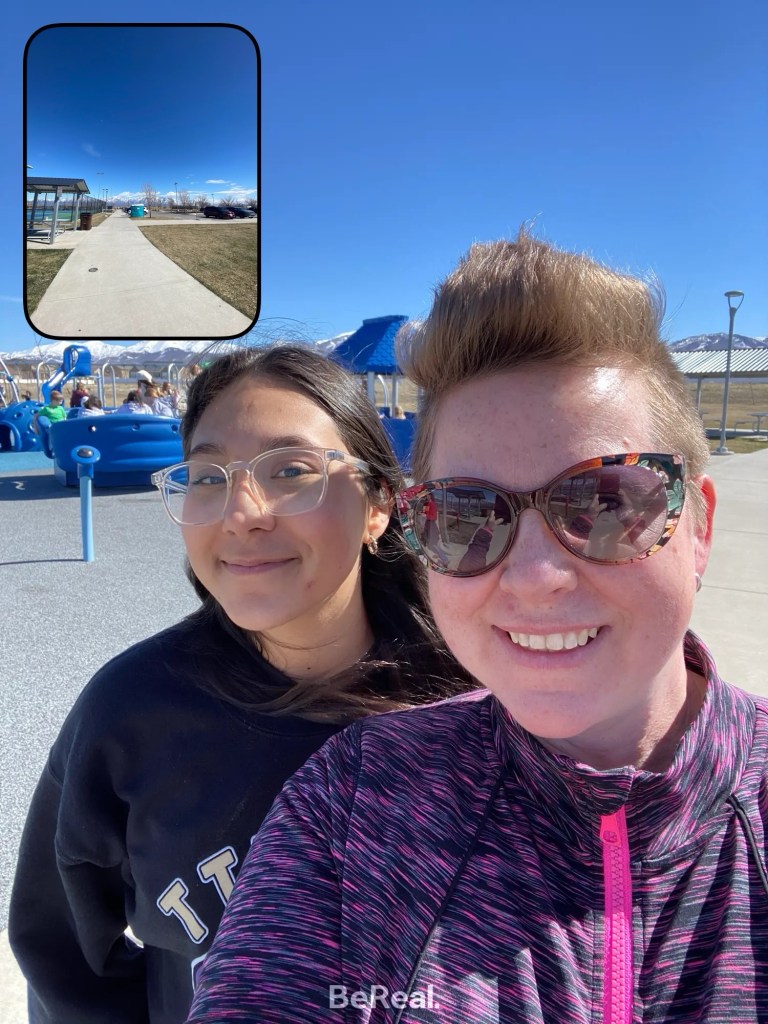
Then we walked with the kids to a fun park about a mile from her home.

Lottie is Key Lime Pie’s BFF. Yay!
Peach Pie had a whole Saturday of homework to do, but Pumpkin Pie was able to come to the park with us. She and I made so many plans for the future. ❤️
Sunday morning, the Kiddie Pies and I went to church with Shelley.
At 12:30pm, we picked up the Man of the House, and headed back home to Monument Valley.
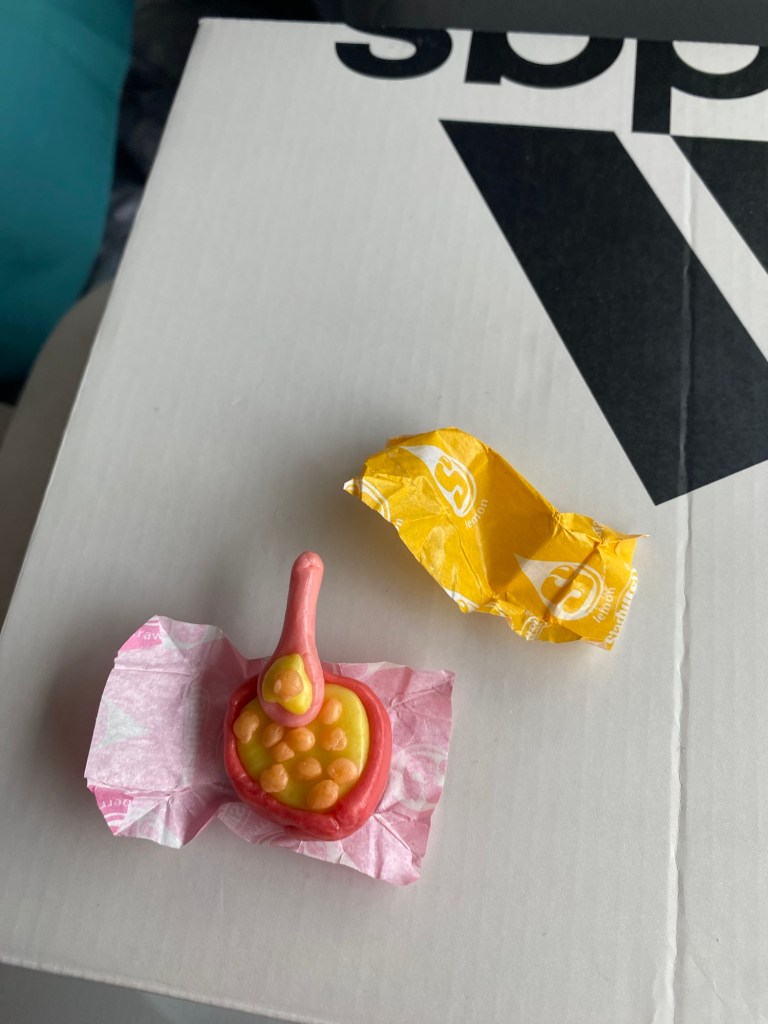
Apple Pie created food from Starbursts on the drive home.

We made good time, and got home around 7pm. I whipped up some Spaghetti-and-Meatballs and oven-roasted Brussels sprouts. It was so good to eat home-cooked food after a week of take-out and easy snacks.

Arches National Park

12 Mar

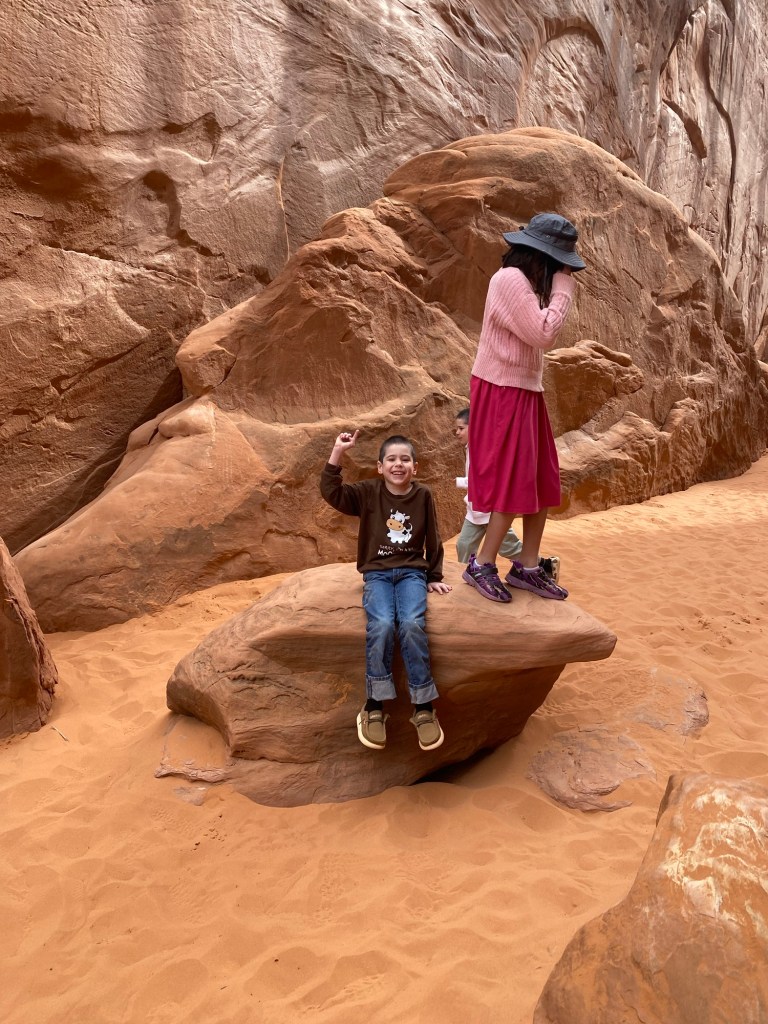
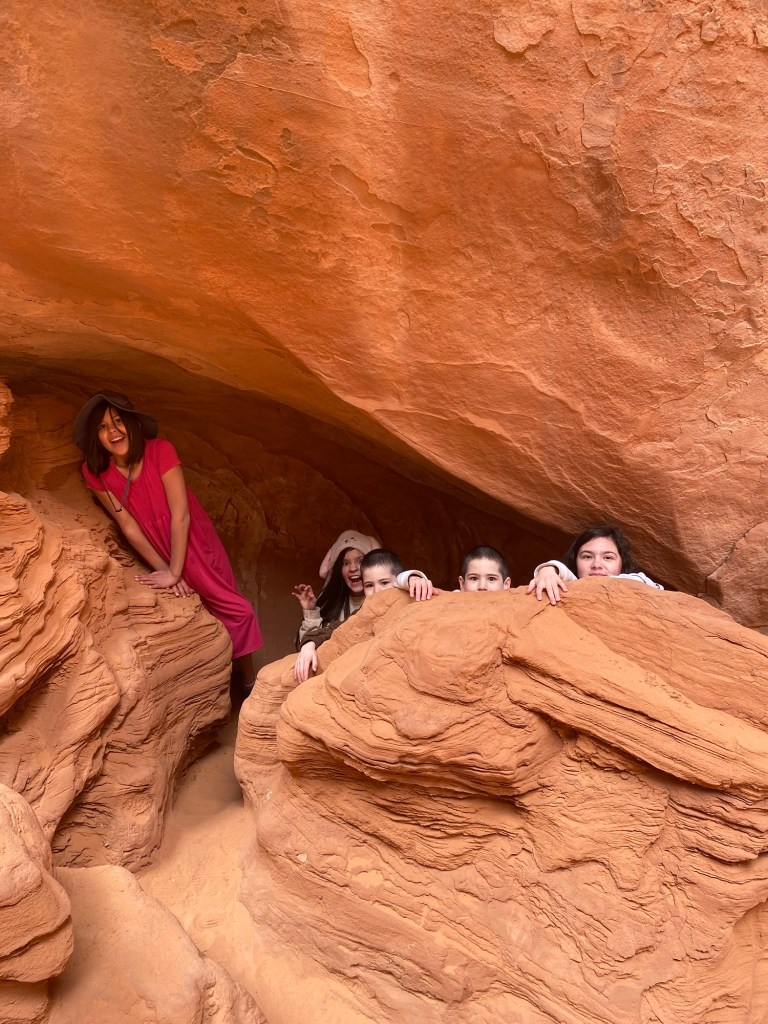
We have been to Arches before, but it was years ago, so our younger kids were too little to remember or not even born yet.

We decided to stop on our way up to Salt Lake City. Moab is about half-way, so it’s a good place to have lunch and a break. The kiddie pies liked it, but they also complained a lot. Which I have hypothesized was mostly because they knew we still had 3.5 ish hours of driving after we left the park, and they just wanted to get it over with.

However, even mostly reluctant kids can not fully ignore the awesomeness of the arches, which is why I have all these enthusiastic photos from a stop that was mostly whining from start to end. The moral of the story is, that family trips like this are worth it, even though it feels like so much hard work at the time, and the whining sucks away all the parents’ energy. Ten years from now, they won’t remember the long car ride, but they will look at these pictures and remember the fun.

I’ve blogged about this same idea before: the worst family vacation ever is still a good thing.

Hiking to the Sandstone Arch
Zeke
Sandstone Arch
Apple Pie
Delicate Arch
GlowWorm and the Resident Captain

Visible Mending

9 Mar

I saw a TikTok about visible mending right after we moved to Monument Valley, and I’ve been wanting to try it since then.

I checked out this book on my Libby App!
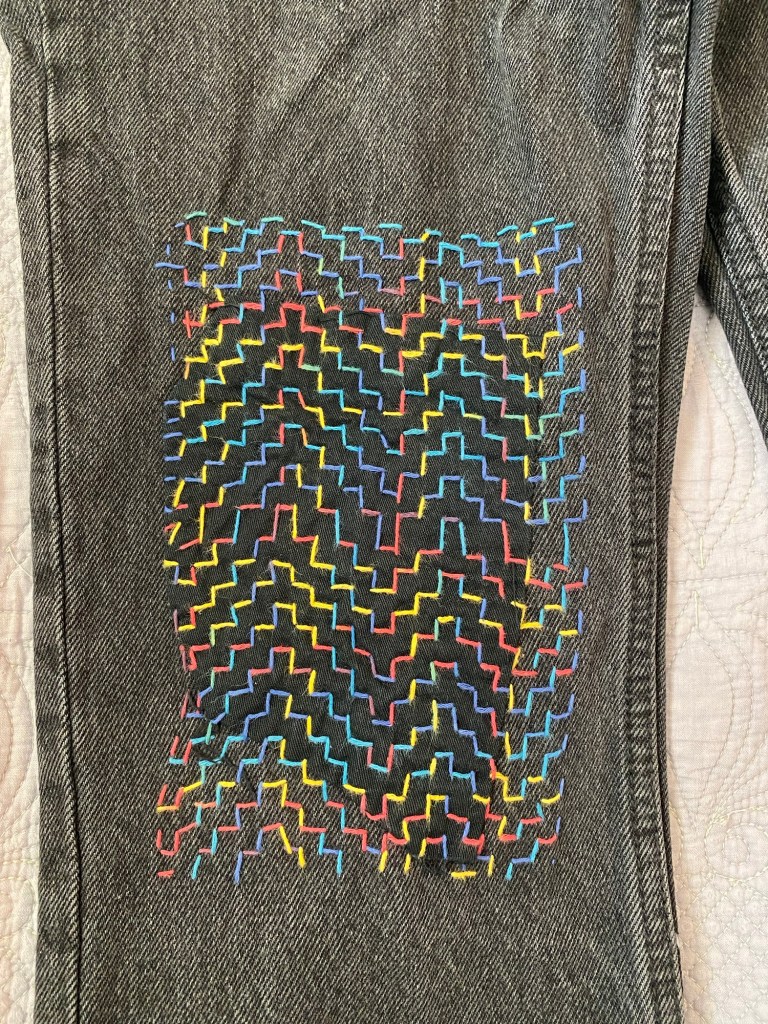
I bought these jeans for Apple Pie online, and they came with holes in the knees!! What?? How did the picture not show that when I bought them? Oh well, now I have an excuse to try that visible mending.
This sticky weave has a pattern on it to help me make straight stitches.

A Literary Success Week

20 Feb
Key Lime Pie and the other great contestants

Tonight night Key Lime Pie won our regional Poetry Out Loud competition. That means that in about three weeks, she will compete in Salt Lake City for the state level competition.

She did such a good job! She recited from memory “The Conqueror Worm” by Edgar Allen Poe and “Momma Said” by Calvin Forbes

Here is “Momma Said”

While the judges were deliberating, the MC asked if anyone in the audience wanted to share a poem. Banana Cream Pie got up and recited

“Antigonish” by Huges Mearns, which she memorized last year during homeschool.

In about three more years, she can compete, too.

A little later, Apple Pie came over to me and recited a poem she had written before school recently. She showed me in her notebook when we got home. It’s not quite the same as what she recited from memory- her recitation actually had better rhyme and meter. But she has this whole notebook full of poems that she has written!

“Poor Mushroom”

A single mushroom lies beneath

A tree.

It sits there day by day.

It sits there

Without a care.

One rainy day

The tree falls

After that day,

A girl picks the mushroom.

The poor mushroom is not

here anymore.

**********

As you may imagine, I’m pretty proud of my girls tonight.

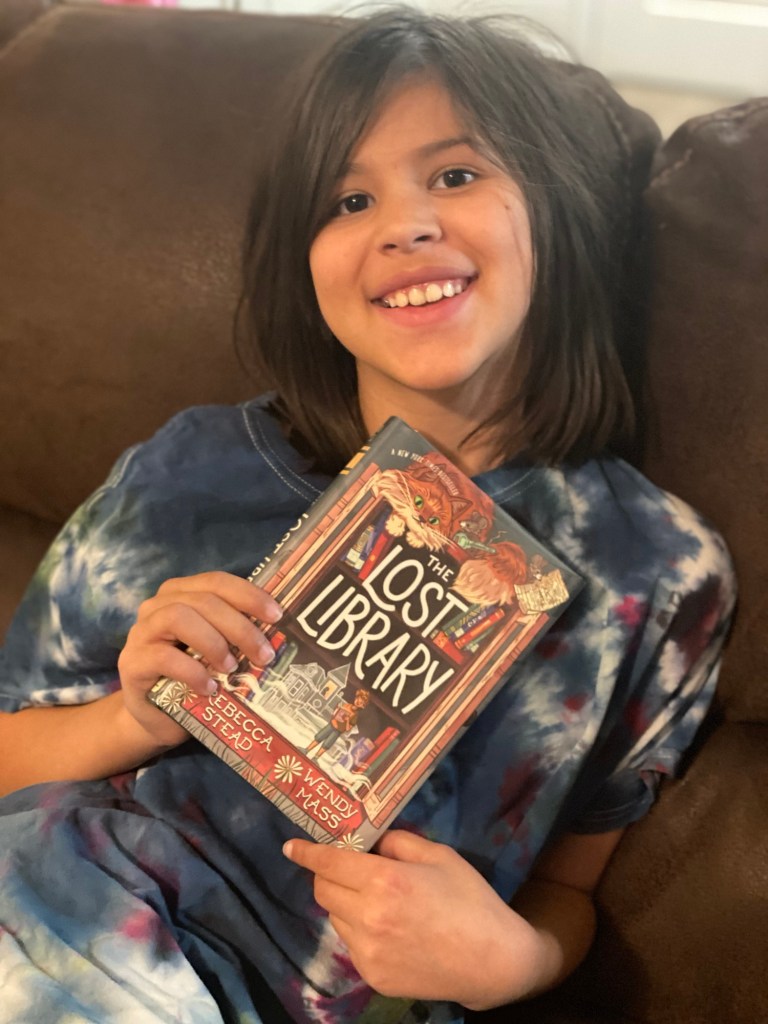
Also, since we had to drive all the way to Blanding, we stopped at the library, too. Apple Pie found a book to check out called The Lost Library by Rebecca Stead and Wendy Mass

Apple Pie was reading while we waited for the poetry to start, and giggling over a funny line. This is a first for her, and as learning to read has been a tough, years long, struggle for her, it is a real breakthrough. My heart is full of gratitude for this tender mercy.

Apple Pie

The Expanding challenge of Motherhood

19 Feb

“God did not condemn His daughters to a menial task. I learned things in the trenches of full-time motherhood I could have learned nowhere else. I am ever grateful and will ever be grateful for those years where God expanded my soul. He expanded every part of me. I became much more intelligent. I became a much better person, as God does not condemn anybody to a place of no growth, ever. There’s always the potential for exaltation in whatever we do …
There was nothing more challenging than I’ve ever done in my whole life… Graduate school was a breeze. But being home with my children and trying to understand how best to teach them about the gospel of Jesus Christ and the other good things of the world, that was the most soul and mind-expanding thing I have ever done. And I learned more from that than I could have ever learned in any other setting.”

~Lili de Hoyos Anderson

I love this quote from Lili de Hoyos Anderson. She says so well how much glory and growth there is in caring for and nurturing children.

On the other hand, I watched my friend’s three kids on Saturday, and I’m really glad that I’m not a mom of children under five anymore. I did my time, and it was sometimes wonderful and sometimes terrible, and now I’m kind of old to chase three-year-olds around.

Happy Valentines Day

16 Feb

Banana Cream Pie’s drawings have leveled up.

And they are still all cats 😂🐈🐈‍⬛

Irreversible Damage- Why I think you should not give or recommend this book to your child who is transgender, or anyone else, for that matter.

16 Feb

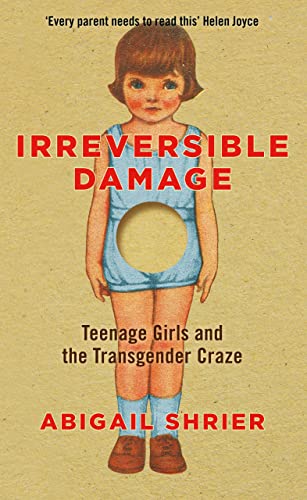
After my daughter came out as gender nonbinary and queer, an extended family member recommended that I read the book Irreversible Damage: the Transgender Craze Seducing Our Daughters by Abigail Shrier. This family member had not read the book but had heard about it on the Joe Rogan podcast.

I read the introduction of the book and dismissed it as inflammatory and hateful. But then, a transperson I love told me how their parent had tried to coerce them into reading it.  I found that some of my friends thought it was great, and one said, “Everyone should read it.”  I became really disturbed that parents might be trying to get their transgender and LGBTQ+ children to read this book.  I decided I had better read the whole book so I could credibly explain why I found it so disturbing, and to find out if it was really as bad as I had thought from the introduction.

It was worse.

When I finished reading the book and all the footnotes, it was bristling with post-it notes marking places I found problematic.  I typed up most of them, and the result was a six-page single spaced word document.  For the sake of clarity, I am not going to include every instance where Abigail Shrier uses language that misleads the reader or shows contempt for transgender teens.  I am going to write about my biggest concerns and give a few examples of each.  Be aware that there are far more problems than the few I am bringing forth here. My biggest concern is the way the author uses language to mock and show her contempt for trans-teens. The language she uses will not convince the trans-person you love that they are not transgender. It could really convince them that suicide is the only option they have. My second biggest concern is the way the author exaggerates the scientific support for her claims. An author who has to exaggerate support for her argument and actively belittle any evidence detracting from her claims cannot be trusted.

Misleading and Outright Dishonest use of Terms

On page after page, the author talks about teens being part of an “epidemic” and a “peer contagion” and a “craze.” While these words have non-derogatory scientific meanings, a teenager reading the book will not understand this. They will feel bludgeoned by these dehumanizing words. Even most adults reading the book will not be immune to the gut reaction of fear that comes hand-in-hand with the words “epidemic,” “contagion,” and “craze.”

In chapter one, Shrier claims that today’s “coddled” teenagers are less emotionally mature than previous generations. She will use this claim to justify calling 25-year-olds “teenagers” and “children.” She needs to do this so she can shock the reader later when she talks about children getting gender altering surgeries. The reader is picturing ten-year-olds and fifteen-year-olds, but the “children” Shrier talks about getting surgery were all over the age of twenty-one when they had surgery. In chapter 3, she refers to an influencer named Ash as a “teenager,” conveniently ignoring the fact that she told us a few paragraphs ago that Ash is in his late 20’s.

Mockery and Contempt

In the introduction, the author compares transgenderism to the Salem witch trials, the nervous disorders of the eighteenth century, and anorexia, bulimia, and “repressed memory” of the twentieth century. She says, “One protagonist has led them all, notorious for magnifying and spreading her own psychic pain, the adolescent girl.”

 In chapter 3, the author discusses the transgender influencers on YouTube who are supposedly convincing all these teenage girls that they are transgender also.  Every time the author quotes or summarizes a trans-influencer’s words, she inserts a sarcastic parenthetical statement that mocks or belittles the person she has just quoted.  Every time she refers to an interview she had with a transgender adult, she makes sure to tell the reader that she could tell what gender the person was born as just by looking at them or by listening to them talk. They can’t fool her, so they aren’t real.
Abigail Shrier never describes what a transgender teenager experiences because her audience is not transgender teens, and her goal is not understanding or compassion for transgender people.  Instead, in chapter 1 (page 18) Shrier describes the normal mental struggles of female teenagers, and how those have increased in recent decades. She talks about depression, social anxiety, and the lack of in-person interaction teens face. She says “puberty is hell,” bringing up cramping, bloating, and menstruation as experiences no girl or woman wants to go through. She says girls are developing physically at younger and younger ages, leading to sexual attention from men when they do not yet feel sexual or want to be so.
These are (unfortunately) normal struggles for women and girls. Shrier’s intended audience can identify with these normal struggles. So when Shrier makes the claim that girls who identify as transgender are over-reacting to a normal adolescent experience, and she expects the reader to agree that to “decide” to be transgender is an over-reaction to the experience that they, themselves, had as teenagers and weathered just fine. The problem is today’s adolescents and their “inability” to bear stress. The reader doesn’t realize that the experience of a transgender teen is completely different from the normal struggles Shrier describes.
The author makes use of sarcastic quotation marks frequently. In chapter 6, while discussing gender affirming care, Abigail Shrier says to parents, “Put out of your mind every manner of very understandable parental interjection.”

What a tragedy that woke therapists will criticize a parent for saying things like, “Are you out of your mind?” and “No I will not call you Clive” and “We don’t even eat hormone-raised beef, for God’s sake!”  The reader is expected to have had these same thoughts and to feel sorry for parents who cannot make these “very understandable” interjections.  These phrases communicate contempt and ridicule, two things which no parent should ever show to any child under any circumstances.

Then Shrier says, “You don’t want your child to hang ‘himself’ in the garage just because you accidentally referred to her as ‘Rebecca’.” Can you feel the mockery dripping out of these sentences of Shrier’s? Can you begin to see why I am so concerned about parents handing this book to their transgender child (be they fifteen or twenty-seven or forty)?

On page 79 Shrier belittles gender dysphoria by equating it with being a tomboy. Being a tomboy is not the same as gender dysphoria — as proven by Shrier, herself, on page 36 where she lists the DSM-5 definitions of gender dysphoria.

On page 98, Shrier tries to delegitimize body dysphoria by equating it to a woman looking in the mirror and being shocked that she has more wrinkles than she remembered.  Shrier deliberately downplays actual dysphoria, which is much different than “lugging around a body we wouldn’t have chosen.” If you will listen to an actual person who has gender dysphoria describe what it is like, you will understand how grievously Shrier is deceiving the readers of her book.

Catch-22

In chapter one, the author belittles transgender men for not really seeking to be men. She says:

“They don’t want to pass- not really. ..They make little effort to adopt the stereotypical habits of men: they rarely buy a weight set, watch football, or ogle girls… Only 12 percent of natal females who identify as transgender have undergone or even desire phalloplasty. They have no plans to obtain the male appendage that most people would consider the defining feature of manhood.”

Later, in chapter 12, after describing how complex a surgery phalloplasty is, and how likely it is to go wrong, the author admits, “if there is any way on earth to alleviate your gender dysphoria without phalloplasty, it’d probably be a good idea to pursue the alternative.”

So your transgender loved one is left with no good options. According to Shrier, if they are really transgender, they should prove it by conforming to toxic societal stereotypes. Further, either they do not have surgery, and Abigail Shrier (and people like her) can accuse them of not being serious enough to be legitimately transgender, OR they do undergo surgery, and Shrier (and people like her) can say they are clearly mentally ill because no one in their right mind would undergo such a complicated surgery with such a low success rate.

Lying about the lived experiences of LGBTQ+ children and adults

Shrier makes a one-sentence statement now and then, claiming to acknowledge the pain these transgender teens are suffering all the while writing multiple paragraphs belittling and dismissing that pain and claiming that people transition genders to receive a “social status upgrade.”

In chapter 4, Shrier describes a boy named Jamie being terribly bullied. Then she writes a paragraph where all her chosen words dismiss his experience. She says, “But one need not appeal to the case of Jamie…to believe that LGBTQ students might be picked on more than most…and are likely more abused than non-trans-identified kids…reports by activist groups suggest the same.” Here the author uses her words to cleverly introduce the possibility of doubt for something widely known and not disputed by anyone because she needs to belittle the bullying that transgender youth face in order to support her claim that kids are only “choosing” to be trans because it levels up their social status.

In chapter 8, Shrier calls being transgender a “status upgrade,” meaning that teens choose to be transgender because it wins them friends and popularity. But what does the data actually show? Twenty-two percent of transgender women who were perceived as transgender in school were harassed so badly, they left the school because of it.  Another ten percent were kicked out by the school.  The idea that transgender youth have an advantage because they are transgender ignores the actual conditions of their lives. The reality is bleak, as you can read about in this largest study ever of transgender people (click on the underlined words to read the study.)

Lying about the Support for her Claims

In the introduction (pxx) Shrier claims that after her book was published “Clinicians began publishing research confirming it…”  the only footnote here links to a paper published by Ken Zucker, rehashing the one problematic Canadian study (by himself) which is the basis for most of the claims this book makes.  Hardly the huge, growing support Shier makes it sound like that her book is building. 

On page 134 the author speaks of “several long-term studies” that have shown that a majority of children with gender dysphoria have outgrown it.  The footnote only lists one.  Again, it is Dr. Zucker’s study.  There is no other study to support her claims.  Anyone who must continually inflate and exaggerate their evidence is not someone I trust.

Shrier refers to a survey study done by a Dr. Littman which she claims proves that teenage girls are only deciding to be trans because it is currently popular to do so. Dr. Littman’s “study” was actually a survey of an extremely limited set of parents for the purpose of gathering data. This data could then be used to create hypotheses to be researched and tested. Only parent who disagreed with their child about their gender identity and whose children did not express gender dysphoria until their teenage years were included. In Dr Littman’s own words:

“The purpose of this study was to collect data about parents’ observations, experiences, and perspectives about their adolescent and young adult (AYA) children showing signs of an apparent sudden or rapid onset of gender dysphoria that began during or after puberty, and develop hypotheses about factors that may contribute to the onset and/or expression of gender dysphoria among this demographic group.”

Breaking the cardinal rule of sociology that correlation is not causation, Shrier uses the results of the survey to draw most of her conclusions about the cause of the “teenage trans epidemic.” She also mistakes the demographic group of the survey as indicative of the whole population, instead of recognizing that it was a very small and tightly controlled group based on the limits put on the survey by Dr. Littman.

On page 31 of chapter 2, Abigail Shrier tries to get Dr. Littman to speculate on a variety of possible causes of the “trans craze.” Dr. Littman refuses to theorize beyond the limits of her data (kudos to her), but much like a lawyer in a courtroom calling out a list of questions she knows are unfair and will be objected to by the defense and thrown out by the judge, yet calling them out anyway because she knows it will influence the jury; Shrier calls out all her speculations hoping to influence the reader and capitalizing on the fact that there is no opportunity for the defense to object, and the likely fact that the reader is not reading critically, but only to find validation for the position they held when they began reading.

Are college students choosing to identify as trans because being white and rich is “perhaps the most reviled identity on today’s campuses?”

“I wonder aloud if inflated collegiate sexual assault statistics haven’t scared adolescent girls off of womanhood entirely.”

Is “this transgender craze partially the result of over-parented, coddled kids desperate to stake out territory for rebellion?”

A discerning reader will see how these questions show utter contempt for students. In Shrier’s mind, they are all pampered rich kids who are over-reacting to small problems. There is no acknowledgment that any college student would have a legitimate reason for claiming to be transgender. The reality of the danger of sexual assault on college campuses is apparently “inflated,” and the well-known fact that transgender persons are vastly more likely to be victims of assault than cisgender persons is blatantly ignored by Shrier because, again, that would weaken her position of claiming that students are “choosing” to be transgender because being a woman is dangerous.

Distinguished World Experts?

Shrier says (on page 29) that Dr. Littman’s research drew praise from “some of the most distinguished world experts on gender dysphoria.” The foot note quotes tweets on twitter from Ken Zucker, and J. Michael Bailey. 

Dr. Ken Zucker is the author’s favorite expert to quote.  This doctor has been kicked out of the medical practice in Canada for using reparative therapy (a form of conversion therapy). You can read about his coercive treatment method in an article which describes Zucker treating a little boy who wants to be a girl by counseling his parents to never allow him to wear pink or play with dolls. The little boy is described as walking by a store window display and covering his eyes so that he won’t see the pink sparkly things and want them. I’m just a mom and not a doctor, but that method seems like shame and repression to me, not healing.

The other “distinguished expert” who tweeted support for Dr. Littman’s study is J. Michael Bailey.  Some of his “distinguished” work includes advocating lenience for a rapist whose victims were infants and young children.  According to Dr. Bailey, “if he didn’t physically hurt them, and if they didn’t remember traumatically, his actions should be penalized less than had he physically hurt them and they did remember.” 

In a paper published (read online at pubmed.ncbi.nlm.nih.gov) J. Michael Bailey stated that it was “morally acceptable” for parents to screen for and abort gay fetuses because “selection for heterosexuality may benefit parents and children and is unlikely to cause significant harm.” 

Did you get that? He is claiming that abortion is ok if the fetus is gay. Aborting a gay fetus is “unlikely to cause significant harm.” I guess death doesn’t count as “significant harm” as long as the person who dies is gay? What??

Is this really the world expert whose recommendations we are going to trust?       

Not me.

If you want to know what the science actually shows, and why Dr. Ken Zucker’s research is not to be trusted, I recommend this 9 minute read from Scientific American.  https://www.scientificamerican.com/article/what-the-science-on-gender-affirming-care-for-transgender-kids-really-shows/

Tell the Truth

If you want to advocate against gender transition for adolescents, you are free to do so. But tell the truth.

When speaking to your child/family member/friend, tell the truth and say, “I don’t have any science to back my feelings up, but I am afraid you will regret your choice.”

Tell the truth and say, “I don’t trust that you understand the consequences of hormones or surgery.”

Tell the truth and say, “I think you are mentally ill, not transgender.”

Tell the truth and say, “I don’t think you know what you really want.”

Tell the truth and say, “I don’t think God wants you to transition.”

And after you tell the truth about what you think, you need to be ready to hear the truth about what they think, and be willing to recognize their conclusions about themselves as at least as valid as yours.

And PLEASE do not use this hateful book to try to convince anyone. Truth telling and compassion are important. This book holds little (if any) of either.

Monument Valley week 29

10 Feb

Apple Pie, Banana Cream Pie, and Key Lime Pie are selling Girl Scout cookies. When we moved here in August, the group was just being formed. I don’t know much about Girl Scouts, but it’s pretty much the only program happening after school around here, so I made the girls join. We had one gardening activity in the fall, and then nothing happened. But the leader (I don’t know the title for the Girl Scout equivalent to a Cub Scout Den Mother is) is making another effort to get things going, and February is cookie month. Apple Pie is dedicated and excited, even when the weather is windy and 30 degrees. At least the sun is shining!

Key Lime Pie and Banana Cream Pie chose to stay home where it’s warm. No sales for them. I found out that one of the teachers here was a Girl Scout, so I need to ask her lots of questions.

This morning we helped clean the church building. One benefit to living here is that the church building is so small, we can get it really clean in under an hour.  The brother in charge of scheduling has a box of cards with jobs on them.  I took pictures of the cards, and I am determined to do 2 things:

1. Make our own job cards for Saturday morning chores at home.

2. Clear all my books and papers off of the flat surfaces around the house so that the cleaning and dusting will be easy. 

In Missouri, when I read house cleaning books, I was always surprised at the emphasis put on weekly dusting. Dusting once a month felt like overkill to me- there just wasn’t that much dust. But here in the desert, there really is enough dust to justify weekly dusting of the piano and bookshelves.  

Back in December, Zeke was sick with a minor cold, but ran a fever enough that he missed nearly a whole week of school. That experience has made him eternally hopeful, and he insists that I check his temperature every morning before school. He likes school fine, but he would rather stay home and watch movies all day.

This week we have been playing lots of BananaGrams. Skeeter made a pretty impressive crossword puzzle. I was going to get a better picture of it, but it got destroyed before I could get around. Some of his words were: admire, riper, prix, and defeat. He reads a little slower than Zeke, but he is faster at spelling.

Two thoughts from my scripture study this week:

From Rosalynde Welch: The ancient Israelites had their tabernacle- their “tent of meeting” where God’s presence was. There they could go to feel His presence and learn more about Him. The greatest revelation of all is the revelation of God to the world in the personage of Jesus Christ. We have temples today, but on a smaller scale we also have the scriptures. The scriptures are a “text of meeting,” they are full of the presence of God, and as we study, if we come to our study desiring to be changed (not just to get out of it what we already know) we can enter into God’s presence, and He can be revealed to us.

This morning I was rereading Susan H Porter’s talk from October 2021 conference.

She said, 

“Sisters and brothers, how can we receive the transforming power of God’s love? The prophet Mormon invites us to “pray unto the Father with all the energy of heart, that ye may be filled with this love, which he hath bestowed upon all who are true followers of his Son, Jesus Christ.” Mormon is inviting us not only to pray that we may be filled with His love for others but to pray that we may know of God’s pure love for ourselves.”

I felt happiness from that reminder that God doesn’t just love everyone. He loves me. 

He loves you.

Love,

GlowWorm

So This is Love

8 Feb

Andyroo is a super picky eater, but he will eat hamburgers. So we eat them more often than we used to. I found a really great bun recipe on allrecipes.

Banana Cream Pie was singing to her burger, so I decided to make a reel.

Here is the bun recipe. I always make a quadruple batch. That way we have rolls all week for snacking. Also, I usually sub half the all-purpose flour for whole wheat flour.

Homemade Hamburger Buns

Ingredients

  • 1 (.25 ounce) package active dry yeast (such as Fleischmann’s ActiveDry Yeast)
  • 1 pound all-purpose flour, or as needed – divided
  • 1 cup warm water (105 degrees F/41 degrees C)
  • 2 large eggs, divided
  • 3 tablespoons butter, melted
  • 3 tablespoons white sugar
  • 1 ¼ teaspoons salt
  • 1 teaspoon olive oil
  • 1 tablespoon milk
  • 1 teaspoon sesame seeds, or as needed

Directions

1. Place yeast into bowl of a large stand mixer; whisk in 1/2 cup flour and warm water until smooth. Let stand until mixture is foamy, 10 to 15 minutes.

2. Whisk 1 egg, melted butter, sugar, and salt thoroughly into the yeast mixture. Add remaining flour (about 3 cups).

3. Fit a dough hook onto stand mixer and knead the dough on low speed until soft and sticky, 5 to 6 minutes. Scrape sides if needed. Poke and prod the dough with a silicone spatula; if large amounts of dough stick to the spatula, add a little more flour.

4. Transfer dough onto a floured work surface; dough will be sticky and elastic but should not stick to your fingers. Gently form dough into a smooth, round shape, tucking ends underneath.

5. Wipe out the stand mixer bowl and drizzle in olive oil. Place dough in the bowl and turn it several times until the surface is thinly coated with oil. Cover the bowl with aluminum foil and let dough rise in a warm place until doubled in size, about 2 hours.

6. Line a baking sheet with a silicone mat or parchment paper.

7. Transfer dough to a floured work surface and pat to flatten any bubbles; form into a slightly rounded, 5×10-inch rectangle, about 1/2 inch thick.

8. Dust dough lightly with flour if needed and cut into eight equal pieces. Form each piece into a round shape, gently tucking ends underneath as before.

9. Use your hands to gently pat and stretch the dough rounds into flat, 1/2-inch-thick discs. Arrange buns about 1/2 inch apart on the prepared baking sheet. Dust buns very lightly with flour. Drape a piece of plastic wrap over the baking sheet (do not seal tightly). Let buns rise until doubled in size, about 1 hour.

10. Preheat the oven to 375 degrees F (190 degrees C).

11. Beat remaining egg with milk in a small bowl, using a fork, until mixture is thoroughly combined. Very gently and lightly brush tops of buns with egg wash without deflating the risen dough. Sprinkle each bun with sesame seeds.

12. Bake in the preheated oven until lightly browned on top, 15 to 17 minutes. Buns will stick together slightly where they touch. Let cool completely. Tear the buns apart and slice in half crosswise to serve

January 2024 Books Read and Rated

2 Feb

(For context: I only give 5 stars for books that are so good, I expect to re-read them.)

Excellent Women by Barbara Pym ⭐️⭐️⭐️⭐️1/2

Really enjoyed reading this one. It was so

relatable.

Breath: the new science of a lost art by James Nestor ⭐️⭐️⭐️⭐️

Sometimes this book seems cuckoo, but the evidence presented by the author is compelling. Changes I’ve made because of this book:

1. serving more raw veg for the whole family, because chewing is vital for the development and strength of the dental palate, leading to better breathing and straighter teeth.

2. Deliberately breathing through only my nose when exercising.

The Dark Lord of Derkhom by Dianna Wynn Jones ⭐️⭐️⭐️⭐️⭐️

Princess Bride type humor and a great story. This was a re-read.

Scythe by Neal Schusterman ⭐️⭐️⭐️⭐️

Interesting (and often gory) distopia. Have not read the full trilogy yet.

Red Earth, White Lies: Native Americans and the Myth of Scientific Fact by Deloris Vine Jr ⭐️⭐️⭐️1/2

The author’s argument that Native histories should not be dismissed by scientists without consideration is fair and valid. That some scientific theories get entrenched without adequate proof is evident. The native histories he shares that line up with geological evidence are fascinating. But the author is extremely bitter and cynical about both the scientific community and Christianity. While his feelings are understandable, his bitterness almost obscures his message, especially in the opening chapters.

Defy the Stars by Claudia Gray ⭐️⭐️⭐️⭐️

Really enjoyed this Sci-fi novel, and I’ve finished the trilogy today, so I can report that the ending makes sense in the universe the author has created. 😅so many trilogies have rushed, unbelievable endings, I’m so glad this wasn’t one of them.

Star girl by Jerry Spinelli ⭐️⭐️⭐️⭐️