Family members who were Killed in Service
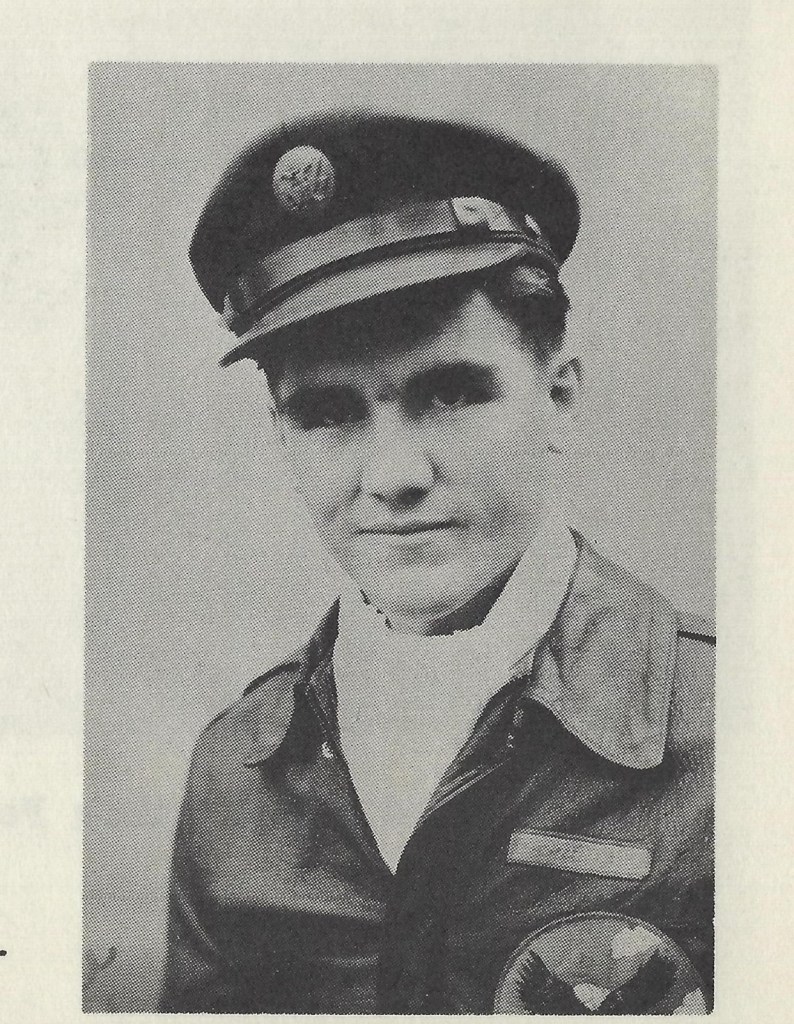
William “Willie” Leroy Hansen
Born 24 January 1921 in Hill Springs, Alberta, Canada
Enlisted in U.S. Army Air Corps 02 Oct 1941
Trained in Ft. Lubbock, Texas
Tail gunner in a Billy Mitchell Bomber (B-25), 22nd Bomb Squadron, U.S. Air Corps
World War II Station: transcribed letters home just say “India.”
Death 13 March 1944
Sea, Morowali, Sulawesi Tengah, Indonesia
Willie had only 2 missions to complete, and he would have been homeward bound. He was killed in action, his plane shot down over the China Sea. An eyewitness report said that the tail gun continued firing as the plane disappeared into the ocean. Two months later, on Mother’s Day, a bouquet of flowers was delivered to Willie’s father. Willie had ordered them before his death.
U.S. Awards:
Purple Heart Medal
Distinguished Flying Cross

Joseph Ellsworth Wheeler
Born 6 April 1920 Binghampton, Pima, Arizona, U.S.
Served in the U.S. Air Force, first as a mechanic for Wier Planes and then for 2 years as station manager at Point Barrow, Alaska, flying bush up and down the Arctic coast.
Death 30 December 1951
Fairbanks, Alaska, United States
On December 30, Ellsworth was flying as a passenger, supervising a 4,000 mile maintenance check on a C-46 (or C-47) Sky Train, flying over Chena Dome, when the plane crashed, killing all 4 crew members. From the wreckage, it appeared that the left wing caught on the ridge as the plane banked over it and threw the nose of the plane into the ground.

Mervin Sharp Bennion
Born 5 May 1887 Vernon, Tooele, Utah Territory, U.S.
Appointed to the Annapolis Naval Academy in 1906, graduated in 1910, third in his class.
A classmate at Annapolis, W.E. Brown, said of Mervyn, “Those who served with him admired him inordinately. Those who hadn’t served with him usually didn’t even know of him. He never called attention to himself.”
World War I: Served on the U.S.S. North Dakota and the U.S.S. New Mexico and on ships assigned to patrol duty off the nation’s shores. Assisted in the commissioning of the U.S.S. Maryland, supervising installation of the ship’s fire control and then served 15 months as the battleship’s assistant gunnery officer. Served on the U.S.S. Florida, performing similar duties. Served as navigator on the U.S.S. Tennessee and U.S.S. Maryland. Served as navigator for President Herbert Hoover’s tour of Latin America.
World War II: Captain of the U.S.S. West Virginia, stationed at Pearl Harbor
Death 7 December 1941
Pearl Harbor, Hawaii Territory, United States
On Saturday evening, December 6, Captain Bennion had dinner at the home of Ralph Wooley, president of the Oahu Stake, and his wife, Romania. They wanted him to spend the night and then go to church with them the next morning, but Mervyn said, no, he’d meet them at church, but he had better be back on his ship.
At 7:55 a.m., the first wave of 183 Japanese planes attacked the U.S. fleet on “Battleship Row” in Pearl Harbor. Mervyn’s younger brother, Howard S. Bennion interviewed officers and other men who were with him that day and put together this detail of the final hours of his life:
“…At a few minutes before 8, Mervyn was in his cabin shaving, preparatory to leaving the ship to go to Sunday School and fast meeting in Honolulu, when a sailor on watch from the bridge nearby dashed in to report a Japanese air attack approaching at hand.
Mervyn instantly gave the command, ‘To your battle stations!’ Then he ran to his own—the conning tower on the flag bridge….In a minute Japanese torpedo planes flew in close from the outside, letting go three torpedoes that struck the West Virginia in rapid succession, tearing a great hole in the exposed side. Almost simultaneously, Japanese bombers flew overhead, barely clearing the masts, and hit the West Virginia, once in the region already damaged by the aerial torpedoes and once in a deadly blow in the magazine. Fortunately, the bomb did not explode; otherwise, the ship would have been blown up as was the Arizona, immediately astern of the West Virginia.
To survey the damage, Capt. Bennion stepped out of the door at the rear of the conning tower. He had scarcely taken two steps when he was hit by a splinter bomb, evidently dropped from a high level and exploding on a turret of the battleship Tennessee, alongside the West Virginia. This splinter tore off the top of his stomach, and apparently a fragment hit his spine and the left hip, for he lost the use of his legs and the hip appeared to be damaged. A pharmacist’s mate put a simple dressing on the wound and tried to ease the pain.
Lying on the deck, Capt. Bennion refused to be evacuated and continued to give orders and instructions to his well-trained crew. The ship brought down 20-30 enemy planes. Capt. Bennion and a seaman were the only crew members to die. ‘He talked only of the ship and the men, how the fight was going, what guns were out of action, how to get them in operation again, casualties in gun crews and how to replace them, who was wounded, what care the wounded were receiving and provisions for evacuating them from the ship, the fate of other ships, the number of enemy planes shot down, the danger of fire from burning oil drifting around the West Virginia from the exploded Arizona, satisfaction over the handling of the ship, satisfaction with the effectiveness of the gun crews in shooting down attacking planes, satisfaction with the conduct under fire of officers and men on the ship.’ Two hours after being wounded, Captain Bennion died. Braving a fire on the ship, devoted crew members moved his body to a safe area.
Adm. David Foote Sellers wrote to Louise Bennion: “…His complete forgetfulness of self and devotion to duty to the last has given us a memory and set an example that will forever serve as an inspiration in the years to come to the officers and men of the United States Navy.”
Secretary of the Navy Frank Knox: “The dying captain of a battleship displayed the outstanding individual heroism of the day.”
Classmate W.E. Brown wrote: “The thing that exasperated me most about Mervyn Bennion was his complete self-effacement. One of the best all-round brains in the Navy, never afraid of or seeking to excuse himself from any job, he tried to give the impression that he was the least well-informed person around, yet acquaintances soon learned that when he made a statement of fact, it was so. The only spectacular thing he ever did in his whole life was his manner of dying. And he did all in his power to make that unspectacular.”
In the film “Pearl Harbor,” Captain Bennion is portrayed by Peter Firth and his rescuer, Doris “Dorie” Miller, is played by Cuba Gooding, Jr.
U.S. Awards
World War II Congressional Medal of Honor
Citation for Medal of Honor reads: For conspicuous devotion to duty, extraordinary courage, and complete disregard of his own life, above and beyond the call of duty, during the attack on the Fleet in Pearl Harbor, by Japanese forces on 7 December 1941. As Commanding Officer of the U.S.S. West Virginia, after being mortally wounded, Capt. Bennion evidenced apparent concern only in fighting and saving his ship, and strongly protested against being carried from the bridge.
The U.S.S. Navy destroyer U.S.S. Bennion was christened in his honor by his wife Louise in 1943.


 Marvelous Pigs in Satin
Leave a comment